

If your dog is scratching but has no fleas, you are not alone — and fleas are actually one of the least common reasons dogs itch. The real culprit is usually hiding in their diet, environment, or skin health, and most cases can be addressed at home once you know what you are dealing with.
Dog scratching without fleas is most commonly caused by environmental allergies, dry skin, or a food sensitivity. Check your dog’s skin for redness, flaking, or hot spots. If the scratching is constant and disrupts sleep or causes hair loss, see a vet.
THE 19 CAUSES AT A GLANCE
1. Environmental allergies (atopy)
2. Food allergies or sensitivities
3. Dry skin
4. Contact dermatitis
5. Sarcoptic mange (scabies)
6. Demodectic mange
7. Bacterial skin infection (pyoderma)
8. Yeast infection
9. Hot spots
10. Seborrhea (flaky, oily skin)
11. Cheyletiella mites (“walking dandruff”)
12. Ear mites
13. Lice
14. Ticks
15. Ringworm (fungal infection)
16. Insect bites (mosquitoes, ants, gnats)
17. Hormonal imbalances (hypothyroidism, Cushing’s disease)
18. Anxiety or stress-related scratching
19. Medication side effects
Why Is My Dog Scratching So Much With No Fleas?
Dogs scratch for one of three core reasons: something is irritating the skin from the outside, something is triggering an immune response from the inside, or the nervous system is responding to stress. Working out which category your dog falls into is the fastest way to find the right fix.
The 19 Causes Explained
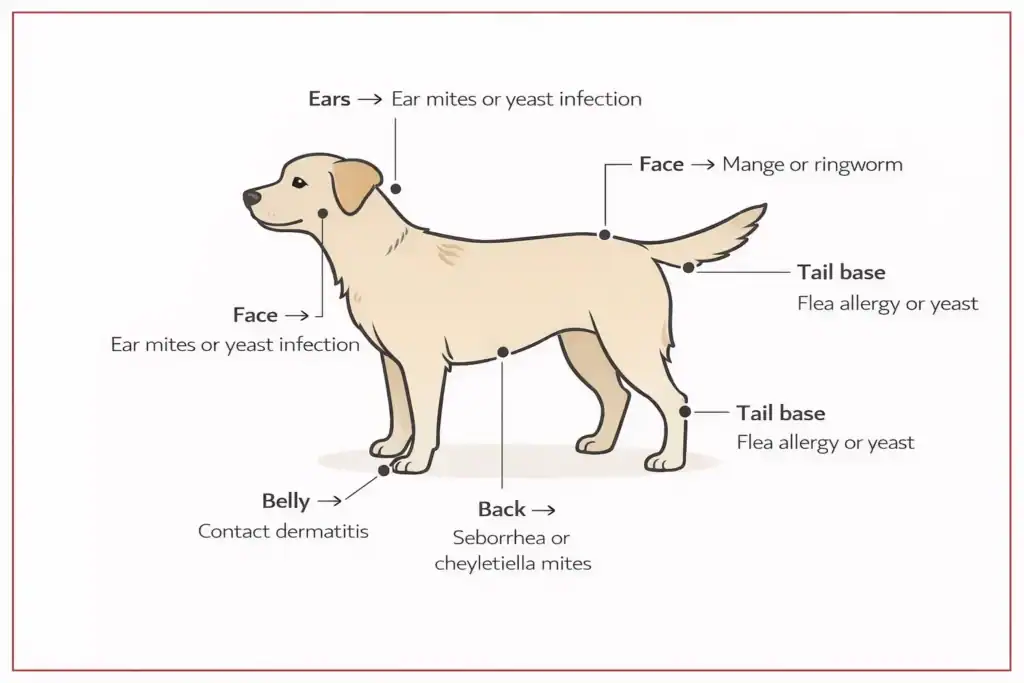
1. Environmental Allergies (Atopy)
The most common cause of chronic scratching in dogs. Pollen, mold, dust mites, and grass trigger an immune response that causes intense itching — especially on the paws, belly, armpits, and ears. According to the American Kennel Club, atopy affects up to 15% of dogs and typically appears between 1 and 3 years of age.
Signs to watch: seasonal pattern, licking paws, rubbing face on carpet, recurring ear infections.
2. Food Allergies or Sensitivities
Beef, chicken, dairy, wheat, and eggs are the most frequent food triggers in dogs. Unlike environmental allergies, food allergies cause year-round itching with no seasonal pattern. The only reliable way to confirm a food trigger is an elimination diet — feeding a novel protein (like venison or duck) exclusively for 8–12 weeks, then reintroducing ingredients one at a time to identify the culprit.
Signs to watch: itching around the face, paws, and rear end; chronic ear infections; soft stools.
3. Dry Skin
Low humidity, over-bathing, or a diet lacking in omega-3 fatty acids leads to flaky, tight skin that itches. More common in winter months or in dry climates. If bathing frequency is the issue, switching to a hypoallergenic dog shampoo with soothing ingredients like colloidal oatmeal or aloe vera can make a significant difference within a few washes.
Signs to watch: visible white flakes, dull coat, dandruff on dark furniture.
4. Contact Dermatitis
A reaction to something the dog physically touches — lawn chemicals, cleaning products, synthetic carpet fibers, or certain plastics. The reaction typically appears on the belly, paws, and chin since those areas have the least fur protection.
Signs to watch: red, irritated patches in areas with less fur; symptoms improve when the dog is kept off grass or away from a specific surface.
5. Sarcoptic Mange (Scabies)
Caused by a microscopic mite that burrows into the skin. Highly contagious to other dogs and, temporarily, to humans. One of the most intensely itchy conditions a dog can have.
Signs to watch: extreme scratching, crusty sores on the ear edges, elbows, and face; hair loss in affected areas.
6. Demodectic Mange
Caused by Demodex mites that live naturally on all dogs. They only cause problems when a dog’s immune system is weakened. Not contagious.
Signs to watch: patchy hair loss, usually on the face and front legs; often in young dogs or seniors.
7. Bacterial Skin Infection (Pyoderma)
Bacteria enter through a small scratch, hot spot, or skin fold and cause a localized or widespread infection. Often secondary to another condition like allergies. If you also notice unusual discharge around your dog’s eyes alongside skin irritation, see our full guide on Dog Eye Discharge Color Chart: 12 Causes & When to Worry.
Signs to watch: red bumps, crusty patches, pus-filled blisters, unpleasant odor.
8. Yeast Infection
Malassezia yeast thrives in warm, moist areas — ears, paw pads, skin folds, and around the tail. Often develops alongside allergies.
Signs to watch: greasy or musty smell, dark discoloration between the toes, head shaking, ear odor.
9. Hot Spots (Acute Moist Dermatitis)
Wet, inflamed patches of skin that develop quickly — sometimes within hours. Triggered by the dog licking or scratching one spot repeatedly.
Signs to watch: moist, red, raw-looking patch that appears suddenly; the dog cannot stop licking or biting it.
10. Seborrhea
A condition affecting the sebaceous glands that produces either very dry, flaky skin (seborrhea sicca) or very oily, greasy skin (seborrhea oleosa). Often genetic in certain breeds.
Signs to watch: heavy dandruff, greasy coat, strong odor, scales along the back.
11. Cheyletiella Mites (“Walking Dandruff”)
Large enough to see with the naked eye, these mites move through the coat and create the appearance of moving dandruff. Contagious to other pets and briefly to humans.
Signs to watch: large, moving white flakes along the back; mild to moderate itching.
12. Ear Mites
Almost exclusively an issue inside the ears. Dogs scratch their ears and shake their heads constantly.
Signs to watch: dark, coffee-ground-like debris inside the ear; intense ear scratching; strong odor.
13. Lice
Dog lice (not human lice — they don’t transfer) are spread through direct contact or shared grooming tools. Less common than other parasites but easily missed.
Signs to watch: dull, matted coat; visible white eggs (nits) attached to individual hairs; restlessness.
14. Ticks
Even after a tick has been removed, the bite site can continue to itch for several days.
Signs to watch: localized scratching at one specific spot; small red bump at the bite site.
15. Ringworm (Fungal Infection)
Despite the name, ringworm is a fungus, not a worm. It causes circular patches of hair loss and itching and is contagious to humans.
Signs to watch: circular, scaly bald patches, most commonly on the face, ears, and paws.
16. Insect Bites
Mosquitoes, ants, gnats, and black flies all bite dogs. The reaction is usually mild and localized but can be intense in sensitive dogs.
Signs to watch: sudden scratching at one location, small raised bump, often on the nose or ears.
17. Hormonal Imbalances
Both hypothyroidism (low thyroid) and Cushing’s disease (excess cortisol) affect skin and coat quality, leading to chronic itching, hair loss, and thickened skin.
Signs to watch: symmetrical hair loss without itching at first, weight gain or loss, lethargy, increased thirst.
18. Anxiety or Stress-Related Scratching
Some dogs develop compulsive scratching or licking as a response to boredom, anxiety, or a major change in their routine.
Signs to watch: scratching only when alone, when stressed, or in specific situations; no visible skin changes.
19. Medication Side Effects
Some antiparasitic medications, antibiotics, or vaccines can temporarily trigger skin reactions and itching as a side effect.
Signs to watch: scratching begins shortly after starting a new medication; no other visible cause.
Home Remedies for Dog Scratching — What Actually Works

| Cause | Best Home Remedy | How to Use |
|---|---|---|
| Dry skin | Oatmeal bath | Dissolve plain, unflavored oatmeal in warm water; soak for 10 minutes |
| Dry skin | Omega-3 supplement | Add fish oil to food daily (dose by weight — ask your vet) |
| Environmental allergies | Paw rinse after walks | Rinse paws with cool water to remove pollen and allergens |
| Yeast / bacterial irritation | Diluted apple cider vinegar rinse | Mix 1 part ACV with 1 part water; apply with a cloth (avoid broken skin) |
| Hot spots | Aloe vera gel | Apply pure aloe vera directly to the spot; soothes and cools |
| Anxiety scratching | Increased exercise + enrichment | 30 extra minutes of activity daily significantly reduces compulsive behaviors |
| Dry skin / inflammation | Coconut oil | Massage a small amount into affected areas; also improves coat shine |
| General irritation | Cool chamomile tea rinse | Brew, cool completely, and pour over irritated skin as a final rinse |
| Low humidity / dry skin | Humidifier | Run one near your dog’s sleeping area in winter |
When Home Remedies Are Not Enough — Signs You Need a Vet
See a vet if your dog has:
- Open sores, bleeding, or raw skin
- Hair loss in patches
- Scratching that interrupts sleep
- Symptoms that have lasted more than 2 weeks
- Swelling around the face or throat (potential allergic reaction requiring emergency care)
- No improvement after 5–7 days of home treatment
How to Figure Out the Cause Without a Vet Visit First
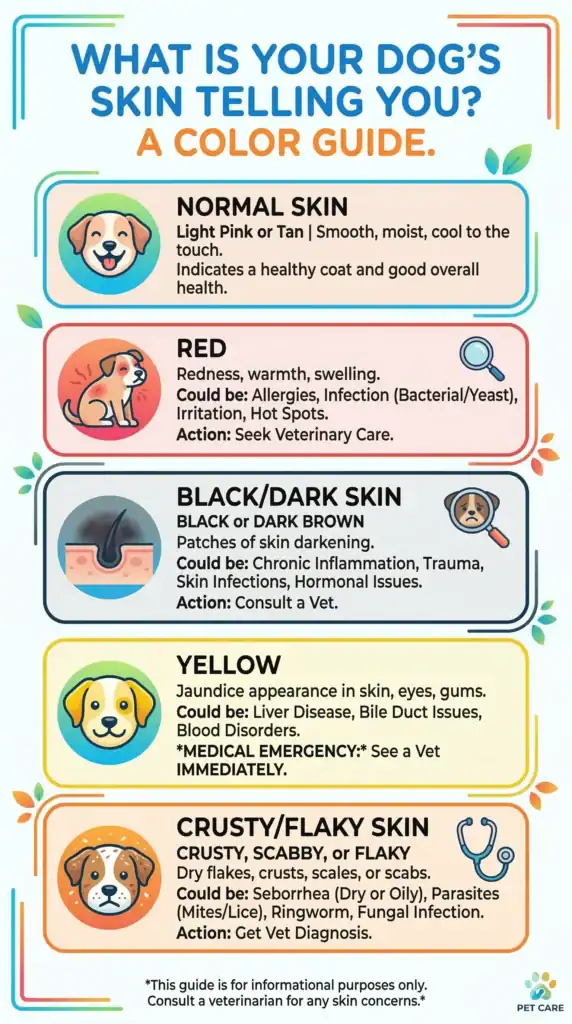
Use this quick checklist:
- Is the scratching seasonal? → Likely environmental allergies
- Did it start after a diet change? → Likely food sensitivity
- Is the skin dry and flaky? → Likely dry skin or low omega-3 intake
- Are there moist, red patches? → Likely hot spots or bacterial infection
- Is it only around the ears and paws? → Likely yeast infection
- Does the dog only scratch when stressed or alone? → Likely anxiety
- Did you recently change cleaning products or lawn treatments? → Likely contact dermatitis
Frequently Asked Questions
Can I give my dog Benadryl for itching?
Yes, diphenhydramine (plain Benadryl with no added xylitol) is generally safe for dogs at a dose of 1mg per pound, up to 3 times daily. Always confirm with your vet before use, especially for small breeds or dogs on other medications.
What is the fastest way to stop a dog from scratching?
An oatmeal bath provides the fastest short-term relief. For lasting results, you need to identify and address the root cause.
Can stress cause a dog to scratch?
Yes. Anxiety and boredom can trigger compulsive scratching or licking even when there is no physical irritant. If you notice your dog scratching more when left alone or after a routine change, stress is a strong candidate.
Is apple cider vinegar safe for dog skin?
Diluted apple cider vinegar (1 part ACV to 1 part water) can help with mild yeast overgrowth and surface irritation. Never apply it to open wounds or broken skin — it will sting and can worsen the irritation.
How long does it take for dog scratching to go away?
Dry skin and mild irritation can resolve within 3–5 days with proper treatment. Allergies, infections, and mange require longer courses of treatment and often need veterinary medication to fully resolve.
What is the difference between Cytopoint and Apoquel?
Both are prescription treatments for chronic itching caused by allergies, but they work differently. Cytopoint is an injectable antibody given by a vet every 4–8 weeks — it targets the specific protein that triggers the itch signal. Apoquel is a daily oral tablet that blocks the itch response more broadly. Cytopoint has fewer drug interactions and is often preferred for long-term use, while Apoquel works faster (within 4 hours). Your vet will recommend one based on your dog’s age, health history, and severity of symptoms. Neither is a cure — they manage symptoms while the underlying cause is addressed.
Sources
- American Kennel Club — Skin Conditions in Dogs: akc.org
- Merck Veterinary Manual — Pruritus in Animals
- Cornell University College of Veterinary Medicine — Canine Atopic Dermatitis