
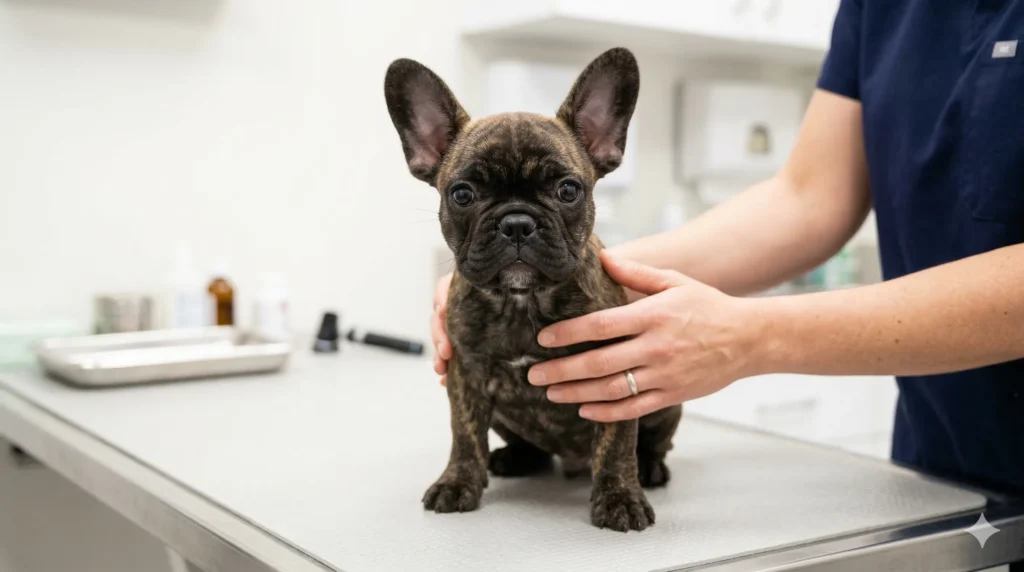
The French Bulldog has been the most popular dog breed in several countries for years running — and the most expensive to own from a health perspective. Their distinctive flat face, compact body, and large head are the result of deliberate selective breeding, and those same features are directly responsible for a cluster of serious health conditions that affect the majority of French Bulldogs to some degree. This is not a reason to avoid the breed — it is a reason to go in with clear eyes. Here are the Big 7.
The 7 most common French Bulldog health issues are: BOAS (breathing difficulty from their flat face), spinal disease (IVDD and hemivertebrae), skin fold dermatitis, eye conditions (cherry eye, entropion), joint issues (hip dysplasia, luxating patella), heat intolerance, and heart problems. Most French Bulldogs will experience at least 2–3 of these in their lifetime. Lifetime vet costs commonly exceed $5,000–$15,000.
The Big 7 At a Glance
- BOAS — Brachycephalic Obstructive Airway Syndrome
- IVDD — Intervertebral Disc Disease
- Hemivertebrae (Spinal Malformation)
- Skin Fold Dermatitis
- Eye Conditions (Cherry Eye, Entropion, Corneal Ulcers)
- Joint Issues (Hip Dysplasia, Luxating Patella)
- Heat Intolerance and Cardiac Stress
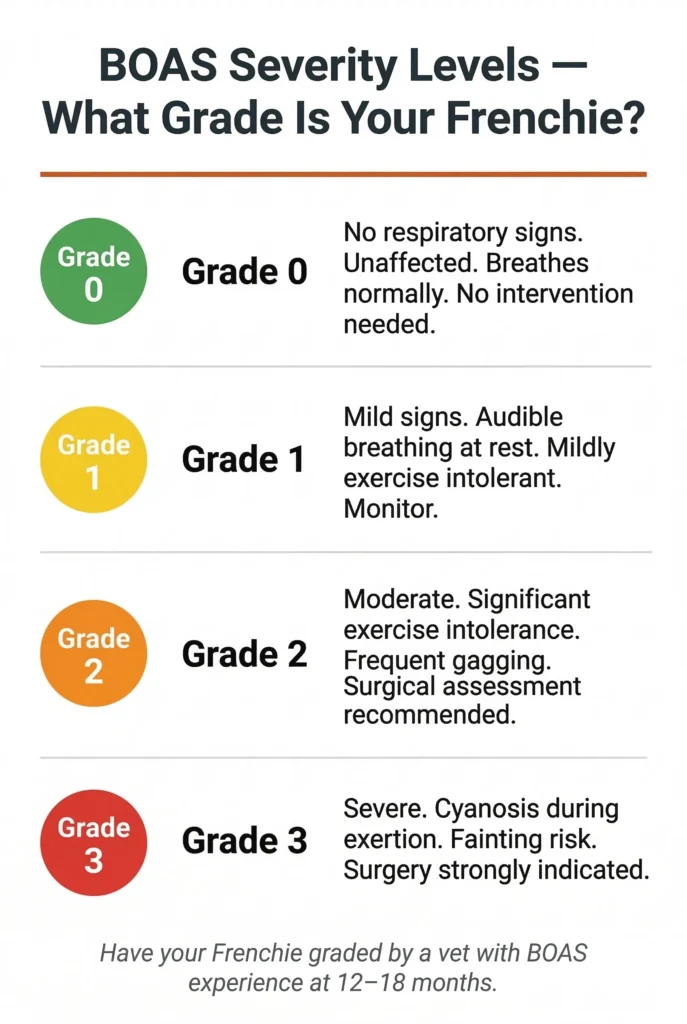
Issue 1 — BOAS (Brachycephalic Obstructive Airway Syndrome)
The most important health issue to understand before buying a French Bulldog. BOAS is a combination of anatomical abnormalities caused by the flat face: narrowed nostrils (stenotic nares), an elongated soft palate that partially blocks the airway, a narrowed trachea, and everted laryngeal saccules. Together, these create a permanently compromised airway.
Signs: loud breathing (snoring, snorting), exercise intolerance, blue-tinged gums during exertion, gagging, regurgitation, sleeping with the head propped up to open the airway.
Severity scale: mild (breathes loudly but functions normally), moderate (limits activity, frequent gagging), severe (cyanosis, fainting, emergency).
Treatment: BOAS correction surgery (widening the nostrils, trimming the soft palate) is performed by a specialist and significantly improves quality of life. Most French Bulldogs with moderate-to-severe BOAS benefit from surgery. Cost: £2,000–£5,000 / $2,500–$6,000.
What to do: have every French Bulldog assessed by a vet with a BOAS grading at 12–18 months. Avoid exercising in heat. Never leave in a hot car — BOAS dogs overheat and die faster than any other breed.
Issue 2 — IVDD (Intervertebral Disc Disease)
French Bulldogs, like all chondrodystrophic breeds (those bred for short legs and long bodies), are at very high risk of IVDD — a condition where the cushioning discs between the vertebrae degenerate and herniate, pressing on the spinal cord.
Signs: sudden onset back or neck pain, reluctance to jump or use stairs, yelping when touched along the spine, weakness or dragging of hind legs, loss of bladder or bowel control (emergency).
The French Bulldog’s compact spine is particularly vulnerable. IVDD can occur from as early as 2 years of age. Any dog with sudden hind limb weakness or loss of bladder control is a neurological emergency. See our guide on Dog Limping But Not Crying: 15 Signs of Silent Pain Vets Find for broader context on spinal pain signals.
Treatment: mild cases are managed with strict rest (6–8 weeks cage rest) and anti-inflammatories. Severe cases require spinal surgery (hemilaminectomy). Without rapid surgical intervention (within 24–48 hours of onset of paralysis), permanent spinal damage can occur.
Cost: surgery £3,000–£7,000 / $4,000–$8,000. This is the most expensive single condition most French Bulldogs face.
Prevention: ramps instead of stairs, no jumping on and off furniture, harness instead of collar (reduces neck pressure), maintain a healthy weight.
Issue 3 — Hemivertebrae (Spinal Malformation)
Many French Bulldogs are born with hemivertebrae — wedge-shaped or malformed vertebrae that cause the spine to curve abnormally. The signature “screw tail” of the French Bulldog is a result of hemivertebrae in the tail — and the same malformation can occur anywhere in the spine.
Signs: range from none (mild hemivertebrae with no spinal cord compression) to progressive hind limb weakness, incontinence, and pain (severe hemivertebrae with spinal cord compression).
Diagnosis: X-ray or MRI. Many French Bulldogs have hemivertebrae with no clinical signs — these dogs can live normal lives. Dogs with progressive neurological signs require spinal surgery.
Issue 4 — Skin Fold Dermatitis
The deep skin folds around the face (nose rope), tail pocket, and body of French Bulldogs trap moisture, debris, and bacteria. Without daily cleaning, these folds develop painful bacterial and yeast infections.
Signs: redness, odour, moisture, brown or black discharge within folds, the dog rubbing the face or rear end.
Prevention and treatment:
- Clean all skin folds daily with a soft cloth or unscented baby wipe
- Dry thoroughly after cleaning — moisture is the enemy
- Apply a small amount of pet-safe antifungal powder (cornstarch or commercial product) to very moist folds
- Vet-prescribed antifungal or antibiotic cream for infected folds
- Some French Bulldogs require surgical removal of excess fold tissue (fold resection) for chronic infections
Tail pocket: the wrinkle directly around the base of the tail requires particular attention — infections here can be severe and extend to the rectum if neglected.
Issue 5 — Eye Conditions
French Bulldogs’ prominent eyes and shallow eye sockets make them prone to multiple eye conditions:
Cherry Eye (prolapsed third eyelid gland): the gland pops out of position as a red mass in the inner corner. Requires surgical replacement (not removal — see our guide on Dog Eye Discharge Color Chart: 12 Causes & When to Worry for full detail on cherry eye and other eye conditions).
Entropion: the eyelid rolls inward, causing lashes to rub the cornea continuously. Causes pain, tearing, and corneal damage. Requires surgical correction.
Corneal Ulcers: the prominent position of the eye makes corneal injuries from scratches, grass seeds, and rough play common. Any sudden squinting or tearing needs same-day vet assessment — corneal ulcers progress rapidly.
Dry Eye (KCS): the tear glands produce insufficient tears, causing chronic irritation and thick discharge. Managed with daily cyclosporine or tacrolimus eye drops for life.
Issue 6 — Joint Issues
Hip Dysplasia
Hip dysplasia is common in French Bulldogs due to their compact, disproportionate build. The hip joint develops incorrectly, causing progressive arthritis and hind limb lameness.
Signs: bunny-hopping gait (using both hind legs together when running), difficulty rising, reluctance to exercise, hind end muscle loss.
Management: weight control (critical — every extra kilogram significantly worsens joint load), joint supplements (glucosamine, omega-3), prescription anti-inflammatories, hydrotherapy, and in severe cases, total hip replacement.
Luxating Patella
The kneecap slips out of its groove — common in small and compact breeds. French Bulldogs frequently have both hip dysplasia and luxating patella simultaneously, which compounds hind limb dysfunction.
Signs: intermittent skipping on a hind leg, sudden three-legged gait for a few steps, the dog “kicking” the leg outward to pop the patella back.
Management: grade 1–2 is managed conservatively. Grade 3–4 requires surgical correction.
Issue 7 — Heat Intolerance and Cardiac Stress
French Bulldogs cannot thermoregulate efficiently. Their compromised airway reduces the rate at which they can cool themselves through panting. Combined with a compact body with a large mass-to-surface ratio, they overheat rapidly — and heatstroke can be fatal within 20–30 minutes.
Danger temperatures: above 22°C / 72°F in direct sunlight or confined spaces. A car on a mild day can reach lethal temperatures in under 10 minutes.
- Never exercise a French Bulldog in temperatures above 20°C / 68°F
- Walk only in early morning or after dark in summer
- Always carry water and offer it every 10–15 minutes during walks
- Never leave in a car, conservatory, or any enclosed space without ventilation and air conditioning
- Know the signs of heatstroke: excessive panting, drooling, tongue turning dark red or purple, collapse — cool immediately with cool (not cold) water and go to an emergency vet

Lifetime Cost Reality Check
Estimated Treatment Costs
| Condition | Likely Treatment Cost | Likelihood |
|---|---|---|
| BOAS Surgery | $2,500–$6,000 | 60–70% of French Bulldogs |
| IVDD Surgery | $4,000–$8,000 | 25–40% lifetime risk |
| Eye Surgery (cherry eye, entropion) | $500–$2,000 per procedure | 30–40% |
| Skin fold treatment (ongoing) | $200–$800/year | Nearly all French Bulldogs |
| Hip dysplasia management (lifetime) | $1,000–$5,000+ | 30–40% |
| Hip replacement (severe cases) | $4,000–$7,000 | 10–15% |
Pet insurance is strongly recommended for French Bulldogs — and should be taken out before 8 weeks of age before any pre-existing conditions are noted. Lifetime cover policies are significantly better value than annual policies for this breed.
Frequently Asked Questions
Do all French Bulldogs have breathing problems?
The vast majority do to some degree — studies suggest 70–85% of French Bulldogs have clinically significant BOAS. The degree ranges from mild (audible breathing) to severe (requiring emergency intervention). Selecting a puppy from health-tested parents with BOAS grading, wide nostrils, and a visible muzzle length significantly reduces but does not eliminate the risk.
How long do French Bulldogs live?
The average French Bulldog lifespan is 10–12 years, shorter than many breeds of similar size. Health-tested dogs from reputable breeders with good BOAS grades and no spinal malformation commonly reach 12–14 years.
Are French Bulldogs high maintenance?
Yes — more than most breeds. Daily skin fold cleaning, monitoring for breathing changes, avoiding heat, managing weight strictly, providing ramps instead of stairs, using a harness, and maintaining regular vet check-ups make French Bulldogs genuinely high-maintenance. The reward is an extraordinarily affectionate, entertaining, and loyal companion — but the commitment must be understood upfront.
Should I buy a French Bulldog from a breeder or adopt?
If buying, use only breeders who health-test breeding stock for BOAS (using the Respiratory Function Grading Scheme), hip scores, and patella scores. Both parents should have BOAS grades of 0 or 1. Avoid breeders who do not health-test. Rescue French Bulldogs are widely available and often come with known health histories — a reputable French Bulldog rescue is an excellent alternative.
Sources
- British Veterinary Association — BOAS Research: bva.co.uk
- American Kennel Club — French Bulldog Health: akc.org
- Universities Federation for Animal Welfare — Brachycephalic Dogs: ufaw.org.uk
- Merck Veterinary Manual — Brachycephalic Syndrome