
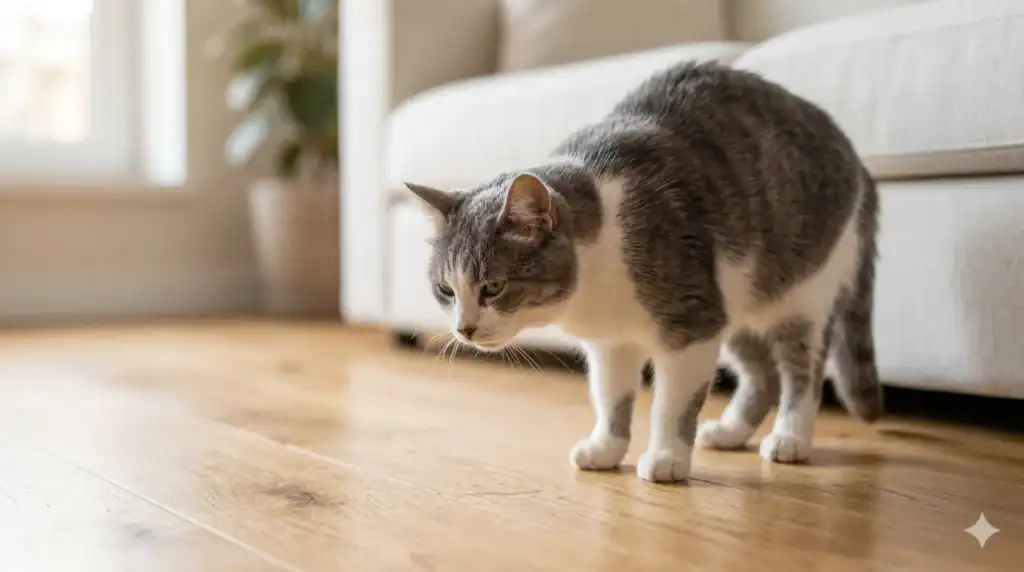
Cat vomiting is one of the most common reasons owners call their vet — and one of the most misread. Not all vomiting is equal. A cat that brings up a hairball once a week is doing something completely normal. A cat that vomits yellow bile every morning before breakfast is telling you something is wrong. And a cat that vomits blood, even once, needs emergency attention. The difference lies in what comes up, how often, and what else is happening. This guide gives you the tools to tell them apart.
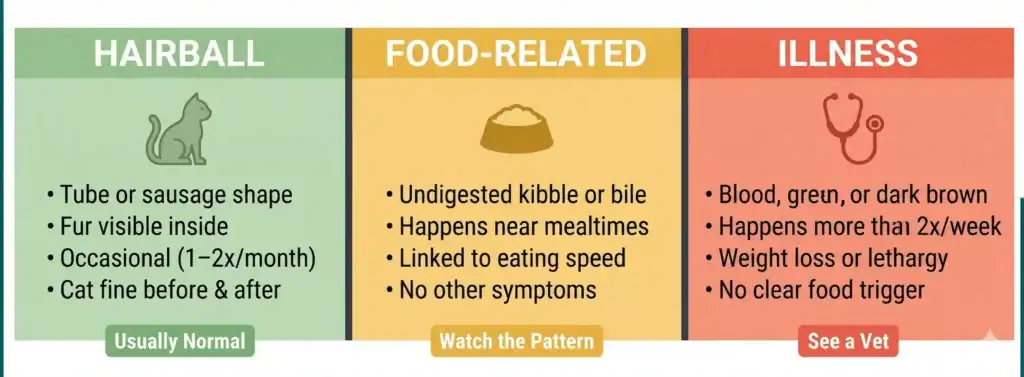
Hairball vomit contains visible fur and is tube-shaped. Food-related vomit looks like undigested kibble or yellow/white foam and often follows a meal pattern. Illness vomit is frequent (more than twice a week), contains blood, green liquid, or coffee-ground material, or comes alongside weight loss, lethargy, or appetite changes. Any vomiting with blood requires same-day vet care.
The Cat Vomit Colour & Appearance Guide
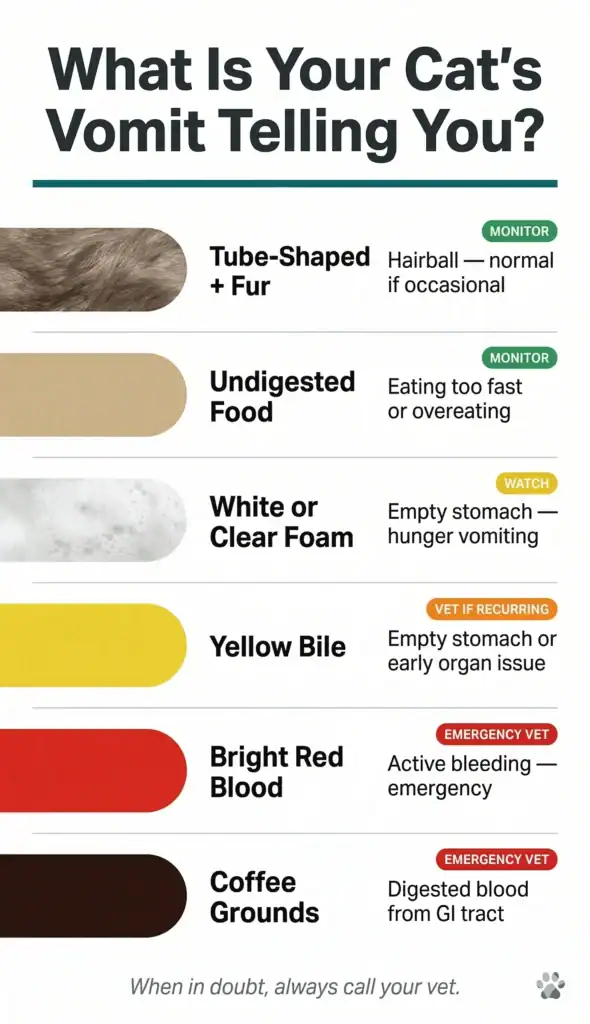
Use this chart to identify what your cat produced before scrolling to the relevant section.
| What It Looks Like | Most Likely Cause | Urgency |
|---|---|---|
| Tube-shaped, brown/grey, visible fur | Hairball (trichobezoar) | Monitor |
| Undigested food, shortly after eating | Eating too fast or overeating | Monitor |
| Clear or white foamy liquid | Empty stomach, hunger vomiting | Monitor / Vet if daily |
| Yellow or yellow-green bile, no food | Empty stomach, early kidney or liver issue | Vet within 48 hours if recurring |
| Undigested food 8+ hours after eating | Motility issue or obstruction | Vet within 24 hours |
| Bright red blood | Active bleeding in stomach or oesophagus | Emergency vet immediately |
| Dark brown, coffee-ground texture | Digested blood from GI tract | Emergency vet immediately |
| Green liquid | Bile from small intestine, possible obstruction | Emergency vet immediately |
| Vomit + worms visible | Intestinal parasite infestation | Vet within 24 hours |
| Chronic, watery, no pattern | IBD, hyperthyroidism, kidney disease | Vet appointment |
Part 1 — Hairballs: What Normal Looks Like
What Is a Hairball?
A hairball — medically called a trichobezoar — forms when a cat swallows loose fur during grooming. Most fur passes through the digestive tract normally, but some accumulates in the stomach and is eventually vomited up. This is a normal part of feline biology, not a disease.
What a genuine hairball looks like:
- Shape: elongated tube or sausage shape (not round — it’s moulded by the oesophagus)
- Content: matted, compressed fur, usually mixed with a small amount of digestive fluid
- Colour: brown, grey, or the colour of your cat’s coat
- Smell: mild, not foul
What Is Normal Hairball Frequency?
- Once every 1–2 weeks in a short-haired cat → normal
- Once every few days in a long-haired cat → normal but manageable
- Daily vomiting with fur present → too frequent, needs veterinary assessment
- Retching repeatedly without producing anything → possible hairball obstruction, vet same day
Hairball Treatments That Actually Work
| Cause | Remedy | How It Works |
|---|---|---|
| Infrequent grooming | Daily brushing | Removes loose fur before the cat swallows it — the most effective prevention |
| Long-haired breed | Furminator or de-shedding tool 3x per week | Dramatically reduces swallowed fur volume |
| Normal shedding | Hairball-formula cat food | Higher fibre content helps fur pass through rather than accumulate |
| Occasional blockage | Laxatone or petroleum-based hairball gel | Lubricates the GI tract to help fur pass — give 2–3 times per week |
| Frequent hairballs | Omega-3 supplement (fish oil) | Improves coat condition, reduces excessive shedding |
When a “Hairball” Is Not a Hairball
Be alert if your cat retches and heaves repeatedly without producing anything. This can look exactly like hairball attempts but may indicate a hairball is lodged and causing a blockage — a genuine emergency. Go to the vet if retching continues for more than 30–60 minutes without producing vomit.
Part 2 — Food-Related Vomiting: Patterns That Point to Diet
Eating Too Fast (Scarf and Barf)
The most common food-related cause. The cat eats quickly, swallows air, and vomits undigested or barely digested food within 30 minutes of the meal. The cat is otherwise perfectly well and will often try to eat the vomit immediately.
Signs: undigested food in a tube or pile, vomit within 30 minutes of eating, cat immediately interested in food again, happens consistently after meals.
Solutions:
- Use a slow feeder bowl with raised ridges or maze pattern
- Divide daily food into 3–4 smaller meals instead of 1–2 large ones
- Place a large smooth rock or golf ball in the bowl to force the cat to eat around it
- Try a licki mat or puzzle feeder to extend meal time
Hunger Vomiting (Bile Vomiting)
A cat with an empty stomach produces bile — the yellow or white foamy liquid that appears with no food content. This typically happens in the morning before the first meal or in the middle of the night. It is the cat equivalent of feeling queasy on an empty stomach. Feeding a small meal before bed usually resolves it.
Signs: yellow or white foam with no food, consistent timing (always morning or always the same time), cat eats normally and seems well otherwise.
Solutions: add a small meal before bed, or split the daily portion across more frequent smaller meals to keep the stomach from emptying completely.
Food Intolerance or Allergy
Unlike food allergies (which primarily cause skin and digestive symptoms), a food intolerance causes chronic intermittent vomiting — often within a few hours of eating a specific ingredient. Beef, fish, chicken, and dairy are the most frequent culprits in cats.
Signs: vomiting that is chronic but not daily, often within a few hours of a meal, soft stools or diarrhoea alongside vomiting, no seasonal pattern.
Solution: an elimination diet — feeding a novel single-protein food (rabbit, venison, or duck) for 8–12 weeks with no other food sources, then reintroducing ingredients one at a time. This is the only reliable way to identify a food trigger.
Dietary Indiscretion
Eating something unusual — a houseplant, a bug, table scraps, spoiled food — causes a one-off vomiting episode that resolves within a few hours.
Signs: single vomiting episode, no recurrence, cat was observed eating something unusual, fully normal afterwards.
Action: monitor for 24 hours. If vomiting repeats, if the cat ate a known toxin (lilies, certain houseplants, human medications), or if the cat becomes lethargic, call the vet immediately. Check the ASPCA Animal Poison Control list if unsure.
Part 3 — Illness-Related Vomiting: Causes, Signs & Urgency
How to Know When Vomiting Means Illness
The key signals that move vomiting from “normal” to “needs a vet”:
- Frequency: more than 2–3 times per week consistently
- Blood: any blood at all, regardless of amount
- Pattern: no clear food-related trigger and no hairball
- Companions: weight loss, lethargy, reduced appetite, hiding, increased thirst
- Duration: vomiting that has continued for more than 2 weeks
If your cat is also refusing food alongside the vomiting, see our full guide on Cat Not Eating? 18 Reasons Ranked by Urgency — the two symptoms together significantly narrow the likely cause.
Inflammatory Bowel Disease (IBD)
The most common cause of chronic vomiting in adult and senior cats. The lining of the stomach or intestines becomes chronically inflamed, disrupting digestion. It is not curable but is very manageable with the right treatment.
Signs: chronic vomiting (weekly or more), gradual weight loss over months, intermittent diarrhoea, poor coat condition, may still eat well initially.
Action: vet appointment and biopsy (endoscopy or surgical) to confirm. Treatment includes prescription diet, prednisolone (steroid), and sometimes chlorambucil for severe cases.
Hyperthyroidism
An overactive thyroid gland speeds up all bodily functions — including gut motility. Food moves through too fast, causing chronic vomiting. One of the most common conditions in cats over 10 years old.
Signs: vomiting in a cat over 8 years old, weight loss despite a strong or increased appetite, hyperactivity, rapid heart rate, unkempt coat.
Action: vet appointment and blood test (T4 level). Treatment includes daily methimazole (oral or transdermal), radioactive iodine therapy, or surgery.
Chronic Kidney Disease (CKD)
Failing kidneys allow toxins to build up in the blood, causing persistent nausea and vomiting — often the yellow bile type in the morning. One of the leading causes of death in senior cats.
Signs: vomiting in a senior cat (over 8), increased thirst and urination, weight loss, bad breath with a chemical or ammonia smell, gradual decline in appetite. If your cat is also eating less, see our guide on Cat Not Eating? 18 Reasons Ranked by Urgency.
Action: vet appointment and blood/urine panel. Treatment includes prescription kidney diet, subcutaneous fluids, phosphate binders, and anti-nausea medication.
Pancreatitis
Inflammation of the pancreas causes nausea, vomiting, and abdominal pain. Notoriously subtle in cats — many vomit intermittently for weeks before being diagnosed.
Signs: intermittent vomiting with no clear food trigger, hunched posture, reduced appetite, mild lethargy, sometimes concurrent diabetes or IBD (the triad is common in cats).
Action: vet appointment and specific blood test (fPLI). Treatment includes anti-nausea medication (Cerenia/maropitant), appetite stimulants, and supportive care.
Intestinal Parasites
Roundworms, tapeworms, and giardia can cause chronic vomiting, especially in kittens or outdoor cats.
Signs: vomiting with visible worms or worm segments, pot-bellied appearance in kittens, diarrhoea, weight loss despite normal appetite.
Action: faecal test at the vet to identify the parasite type. Deworming medication is highly effective. Year-round parasite prevention is the best long-term solution.
Foreign Body Obstruction
A cat that swallowed a toy, string, hair tie, or piece of plastic may vomit repeatedly as the object blocks normal digestion. String is especially dangerous in cats — it can become a linear foreign body, anchoring in the stomach while the rest travels into the intestine, causing the gut to bunch and tear.
Signs: repeated vomiting that does not resolve, retching without producing food or hairball, lethargic, painful abdomen, stopped eating, possible string visible under the tongue or protruding from the rectum.
Action: emergency vet immediately. Never pull a string that appears stuck — it can lacerate the intestines. Surgical removal is often required.
Toxin Ingestion
Lilies (all parts — leaf, pollen, water from the vase), antifreeze, certain essential oils, human medications, and many houseplants are acutely toxic to cats. Vomiting begins rapidly — often within 30 minutes to 2 hours.
Signs: sudden onset vomiting with no food trigger, drooling, dilated pupils, disorientation, collapse, vomiting immediately after potential exposure to a known toxin.
Action: call ASPCA Animal Poison Control (888-426-4435) and go to an emergency vet immediately. Do not wait for symptoms to worsen.
Gastrointestinal Lymphoma
The most common cancer in cats and the most common cause of chronic vomiting in senior cats when IBD and hyperthyroidism have been ruled out. Low-grade lymphoma can mimic IBD so closely that a biopsy is required to distinguish them.
Signs: chronic vomiting in a senior cat, progressive weight loss, intermittent diarrhoea, poor appetite, often previously diagnosed with IBD that stopped responding to treatment.
Action: vet and oncology referral. Low-grade lymphoma responds very well to treatment — many cats achieve remission with chlorambucil and prednisolone and live comfortably for 2+ years.
Vomiting Frequency Guide — Normal vs Concerning
- Once every 1–2 weeks with fur visible → normal hairball, monitor
- Once every 1–2 weeks with no fur → borderline, observe for pattern
- 1–2 times per week consistently → vet appointment within a week
- More than twice a week → vet appointment within 48 hours
- Daily vomiting → urgent vet appointment within 24 hours
- Multiple times in one day → same-day vet
- Any vomiting with blood → emergency vet immediately
When to Go to the Emergency Vet
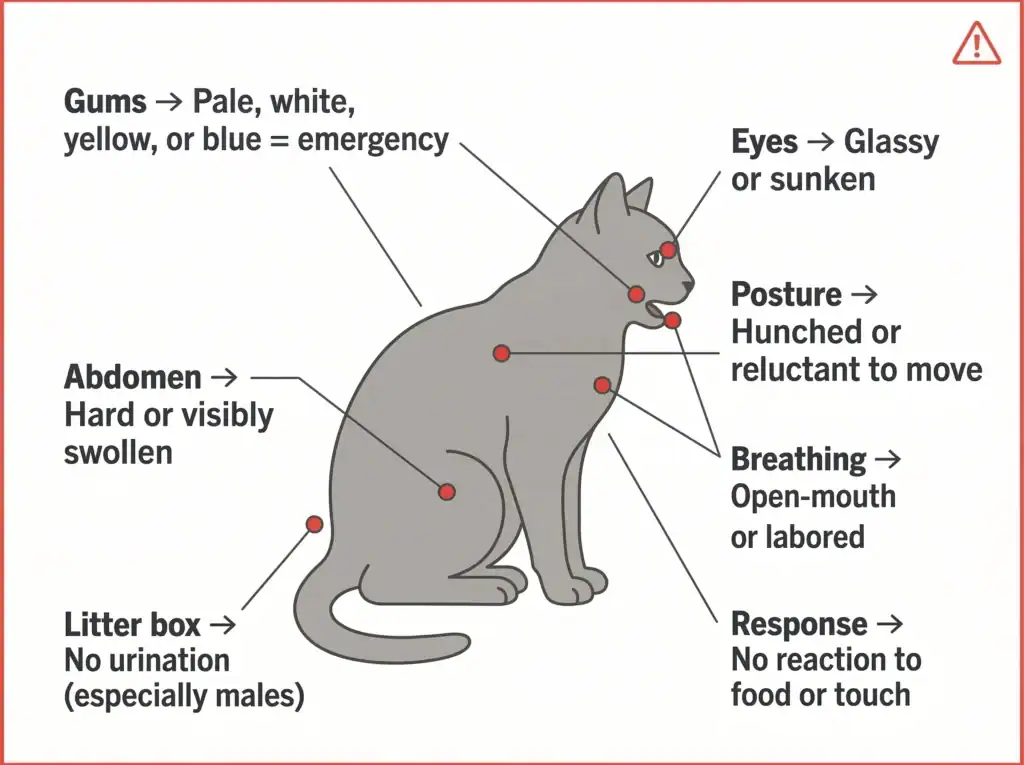
Go immediately if your cat:
- Vomits blood (bright red or dark coffee-ground material)
- Is vomiting green liquid (bile from the small intestine)
- Has been retching for 30+ minutes without producing anything
- Is also showing signs of hiding, extreme lethargy, or distress — see our guide on Cat Hiding: 13 Reasons from Stress to Serious Illness
- Was exposed to a known toxin (lilies, antifreeze, medications)
- Has a visibly painful or swollen abdomen
- Is a kitten vomiting more than twice in a day
Frequently Asked Questions
Is it normal for cats to vomit once a week?
Once a week is at the upper limit of what vets consider acceptable, depending on what is produced. Hairball vomiting once every 1–2 weeks in a long-haired cat can be normal. Bile or food vomiting once a week consistently is not normal and warrants a vet check to rule out an underlying cause.
Why does my cat vomit yellow foam in the morning?
Yellow foam in the morning is almost always bile from an empty stomach. The cat goes too long overnight without food, stomach acid accumulates, and the cat vomits bile. The fix is usually straightforward — add a small meal before bed or split daily food into more frequent smaller portions to prevent the stomach from emptying fully.
What is the difference between vomiting and regurgitation in cats?
Vomiting involves active abdominal heaving — the cat retches, hunches, and the content comes from the stomach. Regurgitation is passive — food slides back up the oesophagus with no heaving, often immediately after eating, and looks like a tube of undigested food. Regurgitation is typically food-related (eating too fast, oesophageal issues) while vomiting has a broader range of causes.
Can I give Cerenia to my cat for vomiting?
Cerenia (maropitant) is a prescription anti-nausea and anti-vomiting medication that is commonly prescribed by vets for cats. It is effective and safe when used as directed. It should not be used without a vet’s guidance — it treats the symptom, not the cause, and using it long-term without identifying the underlying condition can delay an important diagnosis.
How do I know if my cat has IBD or lymphoma?
Clinically, IBD and low-grade intestinal lymphoma look almost identical — chronic vomiting, weight loss, intermittent diarrhoea, and poor coat in an adult or senior cat. The only reliable way to distinguish them is a biopsy (endoscopy or surgical). This matters because while both are treated with similar medications, lymphoma typically requires a more aggressive protocol and carries a different prognosis.
Sources
- Cornell University College of Veterinary Medicine — Vomiting in Cats: vet.cornell.edu
- American Veterinary Medical Association — Feline IBD: avma.org
- Merck Veterinary Manual — Gastrointestinal Disorders in Cats
- ASPCA Animal Poison Control Center — Toxic Plants for Cats: aspca.org